“Therefore, as God’s chosen people, holy and dearly loved, clothe yourselves with compassion, kindness, humility, gentleness and patience.” – Colossians 3:12
There have been two very public murders in this country this past month.[1]
Yet it is striking how differently these stories are told depending on who is telling them.
Some have justified these killings as preventions of “domestic terrorism.” Some have claimed that the ICE agents were acting from a place of self-defense. One of the individuals killed was driving a large vehicle and the other had a concealed handgun. Some have even attempted to argue that both of these individuals were a part of a larger conspiracy and had been trained to sow agitation and lawlessness into the communities they lived within.
Yet others have pointed out that, according to video evidence, both of the individuals killed didn’t seem to be doing anything harmful toward the agents who shot them. In fact, on both accounts, ICE were the aggressors. If they were acting in self-defense, these agents went way overboard. One was shot three times. The other was shot ten times in the back.
Christian news media also reflects this secular divide. Christianity Today has labeled these acts as “executions.”[2] Religion News Service has been primarily documenting the many clergy who have traveled to Minneapolis to stand in solidarity with those protesting ICE.[3] The National Catholic Reporter has been calling for Christians to “pray, mourn, and say ‘no’ to Ice funding”[4] and have labeled the immigration crackdowns that have lead to such violence as a disregard for human rights.[5] On the other hand, The Christian Post has spent a lot of energy arguing against the current impulse to compare ICE to the Gestapo.[6] Al Mohler, on his popular conservative Christian podcast The Briefing, has called for believers to remember to “respect the rule of law” and resist mayhem and radicalization.[7] But as many have noted, a large portion of right-wing Christian media, as well as those who may be considered leaders within that sphere, have stayed noticeably quiet about these killings.[8]
Now, I am not bringing up that last bit of information in order to argue that silence on the part of right-wing Christians means that they are complicit in some way.[9] I am also not attempting to argue that left-wing Christians are intentionally rallying up their base or using this moment to virtue signal. My only point is this: the same division we see in secular media over these murders exists in Christian news sources too. If we are using social media and the news, even news written from a biblical worldview, in order to understand and interpret this past month, we will only find ourselves participating in further division.
As Christians, what side are we supposed to take? From what lens are we supposed to view such events?
And in what ways are we supposed to respond?
Bonhoeffer’s “View from Below”
In the essay After Ten Years, German theologian Dietrich Bonhoeffer shares how a decade of living under Hitler deeply affected his inner life and sense of moral responsibility.
I find his words very helpful.
“Certainly, we are not Christ, nor are we called to redeem the world through our own deed and our own suffering; we are not to burden ourselves with impossible things and torture ourselves with not being able to bear them. We are not lords but instruments in the hands of the Lord of history; we can truly share only in a limited measure in the suffering of others. We are not Christ, but if we want to be Christians it means that we are to take part in Christ’s greatness of heart, in the responsible action that in freedom seizes the hour and faces the danger, and in the true sympathy that springs forth not from fear but from Christ’s freeing and redeeming love for all who suffer. Inactive waiting and dully looking on are not Christian responses. Christians are called to action and sympathy not through their own firsthand experiences but by the immediate experience of their brothers, for whose sake Christ suffered.”[10]
Bonhoeffer is arguing that, even though we will not be able to solve the world’s problems, believers have been tasked to act like Jesus in the face of suffering. We aren’t to shy away from stepping into difficult moments; instead, we should sympathize with the suffering, responding to them with compassion and kindness.
He continues on with this point:
“It remains an experience of incomparable value that we have for once learned to see the great events of world history from below, from the perspective of the outcasts, the suspects, the maltreated, the powerless, the oppressed and reviled, in short, from the perspective of the suffering. If only during this time bitterness and envy have not corroded the heart; that we come to see matters great and small, happiness and misfortune, strength and weakness with new eyes; that our sense for greatness, humanness, justice, and mercy has grown clearer, freer, more incorruptible; that we learn, indeed, that personal suffering is a more useful key, a more fruitful principle than personal happiness for exploring the meaning of the world in contemplation and action.”[11]
In other words, learning to see the world through the eyes of those who are suffering enables us to act more justly. When we experience hardships, or learn to empathize with those who are, we are able to discern our present reality a bit better.
The biblical witness is clear – God sees our suffering and He responds. God has a record of the tears that humanity has shed on account of injustice (Psalm 56:8). He has promised to one day wipe these tears from our eyes when Jesus returns to make all things right (Revelation 21:4). But God hasn’t just observed the suffering of humanity. He entered into it. God became human and suffered right alongside us. In fact, such a thing was necessary. Jesus can only save what he has assumed. Jesus needed to experience what it meant to be fully human so that he could fully save us from our sins (Hebrews 2:17-18).
And more, believers are called to imitate Christ’s empathy and compassionate action.
In the book of Colossians, Paul explains that Christ has united believers who were once divided (Gentiles, Jews, Barbarians, Scythians, etc.) into one body. Believers in Jesus are no longer defined primarily by these former group identities but are now called to see themselves as God’s chosen people. However, being united in Christ hasn’t removed differences or the difficulty of getting along. Towards that end, Paul charges us to “clothe ourselves with compassion” for others (Colossians 3:12).
It should be mentioned that “clothe ourselves with compassion” is a poor English translation of the Greek phrase σπλάγχνα οἰκτιρμοῦ. I’m not advocating for the KJV translation, but in this instance, I think it does a better job conveying what Paul meant: “put on the bowels of mercy.” In other words, we are to train ourselves to feel within our very guts a deep compassion for others – even when that other is nothing like us.
God’s Proclivity Toward the Vulnerable
There is another layer to all of this that I feel is important to point out. All throughout scripture, God seems to display a special proclivity toward those who are the most vulnerable. That is not to say that God plays favorites. God loves everyone equally, but He does not remain neutral in defending those in need.[12]
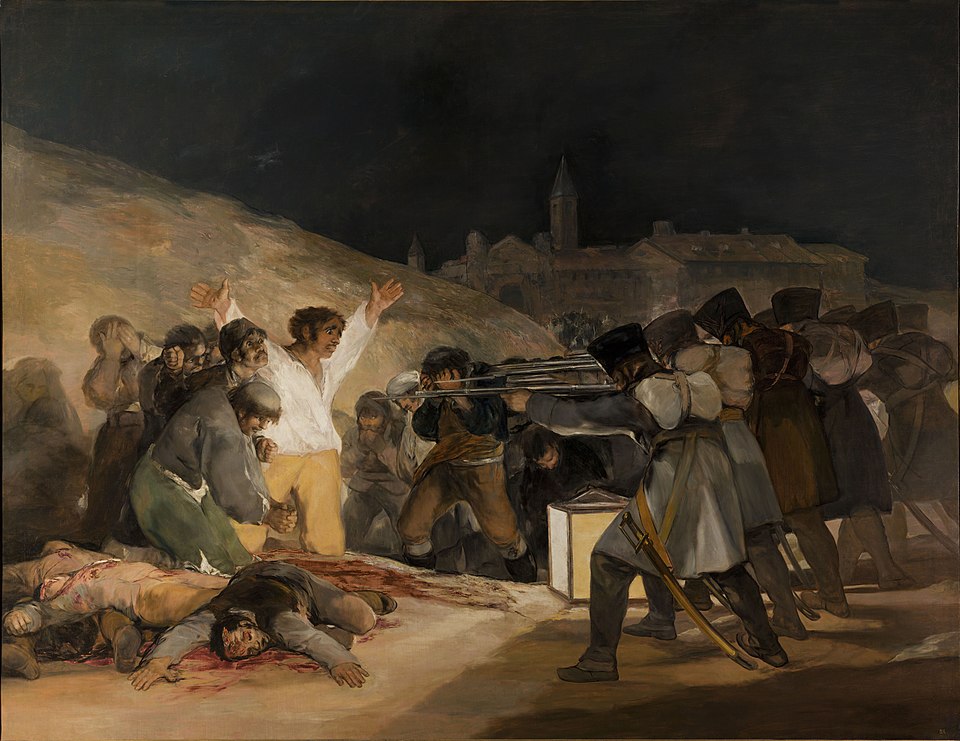
Psalm 138:6 tells us that even though God is exalted high in the heavens, He takes time to hear the cries of the lowly. The Old Testament prophets repeatedly remind Israel that God defends the cause of the poor and needy. Further, the prophets explained that if Israel did not care for the vulnerable in their midst, they would experience God’s wrath (Amos 6:4-7; Isaiah 1:16-17, Isaiah 1:21-26, Isaiah 3:14-25; Jeremiah 5:26-31, Jeremiah 22:13-19). And oddly, there are two axioms in Proverbs that link “the poor” with the Lord: “Those who oppress the poor insult their Maker, but those who are kind to the needy honor Him (Proverbs 14:31).” and “Whoever is kind to the poor lends to the Lord and will be repaid in full (Proverbs 19:17).” The author of these proverbs links care for the poor with service directly to God himself. When one insults, or makes life difficult for the poor in their community, they are insulting God. When one lends money to someone who might not be able to pay them back, they are lending money to God.
The New Testament witness is similar. God sides with the “least of these,” and asks his followers to be sure to care for those in prison, orphans, and other vulnerable groups (Matthew 25:34-40). Jesus also explains that when his followers welcome those who have no social or economic power, in a sense, they are welcoming God (Mark 9:37). And in another striking passage, Jesus validates his Messiahship by way of his care for the vulnerable. When John the Baptist asks his disciples to figure out if Jesus is who others claim him to be, Jesus tells John’s disciples to report to him that: “The blind receive sight, the lame walk, those who have leprosy are cleansed, the deaf hear, the dead are raised, and the good news is proclaimed to the poor” (Matthew 11:5).
Again, it isn’t as if God is against people who are affluent, have money, or are comfortable. Of course that’s not the case! But it seems that God does go after people who take advantage of others to gain wealth or prestige (James 5:1-5). And genuine repentance from sin also requires a move toward social or economic reparation if such sins have taken place (see the story of Zaccheaus).
What’s my point in bringing this up?
God has a special proclivity toward the vulnerable, and we should too.
Suffering from Stupidity
Let’s now return to Bonhoeffer’s essay to consider a truth that’s a bit tougher to swallow:
“The fact that the stupid person is often stubborn must not blind us to the fact that he is not independent. In conversation with him, one virtually feels that one is dealing not at all with him as a person, but with slogans, catchwords, and the like that have taken possession of him. He is under a spell, blinded, misused, and abused in his very being. Having thus become a mindless tool, the stupid person will also be capable of any evil and at the same time incapable of seeing that it is evil.”[13]
Consider also:
“The danger of allowing ourselves to be driven to contempt for humanity is very real. We know very well that we have no right to let this happen and that it would lead us into the most unfruitful relation to human beings. The following thoughts may protect us against this temptation: through contempt for humanity we fall victim precisely to our opponents’ chief errors. Whoever despises another human being will never be able to make anything of him. Nothing of what we despise in another is itself foreign to us. How often do we expect more of the other than what we ourselves are willing to accomplish? Why is it that we have hitherto thought with so little sobriety about the temptability and frailty of human beings?
We must learn to regard human beings less in terms of what they do and neglect to do, and more in terms of what they suffer. The only fruitful relation to human beings—particularly to the weak among them—is love, that is, the will to enter into and to keep community with them. God did not hold human beings in contempt but became human for their sake.”[14]
To my daughter’s ears, “stupid” is a swear word.
My wife and I encourage her to think that way. To call someone else stupid nowadays is to attempt to insult their mental capacities or intelligence. That’s not exactly what Bonhoeffer is doing in this essay. He is instead making a comment about social responsibility. Someone who is “stupid” is someone who has become bewitched by propaganda, slogans, or catchphrases. And now, under their spell, they are virtually unable to think outside the categories the propaganda provides.[15]
Bonhoeffer was deeply frustrated with the many German Christians who blindly followed Nazi propaganda. He watched people justify the ostracizing, and eventually the genocide, of vulnerable groups such as Jews, the disabled, and those in the LGBT community. To him, and as it should be for all of us, both these actions and the reasoning behind them were abominable. Yet it was precisely this “stupidity,” this captivity to distorted thinking, that kept his fellow Germans from naming the Nazis as wicked. In that sense, they too were suffering. They were suffering from the sin of delusion. They were fully responsible for their actions, and yet they were also ensnared by lies that deformed their moral vision.
Here is where Bonhoeffer’s words become very convicting to me personally.
Bonhoeffer then points out that “nothing of what we despise in another is itself foreign to us.” That is to say, German Christians and citizens who sided with the Nazis were committing unthinkable evils. But the same capacity for evil that exists in them can also be found within us. They were human just like we are. Because of all of this, Bonhoeffer argues that we should actively resist contempt for any human, Nazi sympathizer or otherwise, because doing so takes away that person’s humanness. And when we dehumanize them, we forget that 1) they too are suffering, and 2) they too were ones whom Jesus died for.
Contempt shuts down transformation. It doesn’t allow us to truly understand the fears that might have driven another person to make the choices they’ve made or to see the wounds that they might be carrying.
And if Jesus refused to view humanity in contempt, we don’t get to indulge in it either.
Opinions are split on who is to blame for the killings that have taken place this month in Minneapolis. And relatedly, some of us might have different opinions on which faction is the one that’s “brainwashed.” Is it the case that liberal believers are being duped by Marxist ideology? Or maybe it’s the case that conservative Christians have fallen under the propaganda of the MAGA movement. There are Christians on both sides of this spectrum. However, as a Christian, regardless of what side you might find yourself on, you do not have the right to hold your political opponent in contempt. Do not remove their humanness in an attempt to justify your viewpoint.
The best way forward is to see them from the lens of their suffering. This will enable you to respond like Jesus, from a place of compassion and not scorn.
Seeing & Responding to Others from their Suffering
To return to our original question: as Christians, from what lens are we supposed to view events like the tragedies that have taken place this month? And in what ways are we supposed to respond?
In light of the above content, here are a few questions you could walk yourself through that might aid in your interpretation of this past month or tragedies like them. Pause. Breathe. And then ask yourself these questions:
1. Who is suffering? Who is in the position of vulnerability?
2. Who is causing the suffering? How might they too be caught up in a lie that is making them react in the way that they have?
3. Where is Jesus in this moment? If God has a special proclivity toward the vulnerable, how might God respond within this situation?
As Christians, our first allegiance should never be to partisan politics.[16] To the contrary, as Christians, we have been called to embrace radical compassion towards even those who do not look or act like us. We should learn to view history from below.
And like Jesus, we really should have a special proclivity for those who are suffering.
[1] I am referencing the killing of Renee Good on January 7, 2026 as well as the killing of Alex Pretti on January 24, 2026.
[2] https://www.christianitytoday.com/2026/01/authority-responsibility-not-excuse-alex-pretti-ice-shooting-minnesota-trump/
[3] https://religionnews.com/2026/01/27/catholic-bishops-make-urgent-pleas-to-rein-in-ice-after-recent-deaths/
[4] https://www.ncronline.org/news/cardinal-tobin-pray-mourn-and-say-no-ice-funding
[5] https://www.ncronline.org/news/qa-bishop-seitz-immigration-crackdown-shows-total-disregard-human-rights
[6] https://www.ncronline.org/news/qa-bishop-seitz-immigration-crackdown-shows-total-disregard-human-rights
[7] https://tinyurl.com/58592x2t
[8] https://baptistnews.com/article/as-religious-leaders-decry-prettis-death-sbc-president-is-silent/
[9] I’ll let the book of James, Martin Luther King Jr’s “Beyond Vietnam” speech, and their own consciences do that.
[10] Barnett, Victoria J.. “After Ten Years”: Dietrich Bonhoeffer and Our Times (pp. 27-28). Augsburg Fortress Publishers. Kindle Edition.
[11] Barnett, Victoria J.. “After Ten Years”: Dietrich Bonhoeffer and Our Times (p. 30). Augsburg Fortress Publishers. Kindle Edition.
[12] For more along these lines, see: Sider, Ronald J. Rich Christians in an Age of Hunger: Moving from Affluence to Generosity. Nashville: W Pub. Group, 1997. 67.
[13] Barnett, Victoria J.. “After Ten Years”: Dietrich Bonhoeffer and Our Times (p. 23). Augsburg Fortress Publishers. Kindle Edition.
[14] Barnett, Victoria J.. “After Ten Years”: Dietrich Bonhoeffer and Our Times (p. 24). Augsburg Fortress Publishers. Kindle Edition.
[15] For a good summary on Bonhoeffer’s theory of stupidity, check out: https://sproutsschools.com/bonhoeffers-theory-of-stupidity/
[16] In fact, I’d argue that partisan politics are poison in and of themselves – our only allegiance should be to the kingdom of God.
 Scripture Simplified